Hammer Drill vs Impact Driver: When to Use Each One
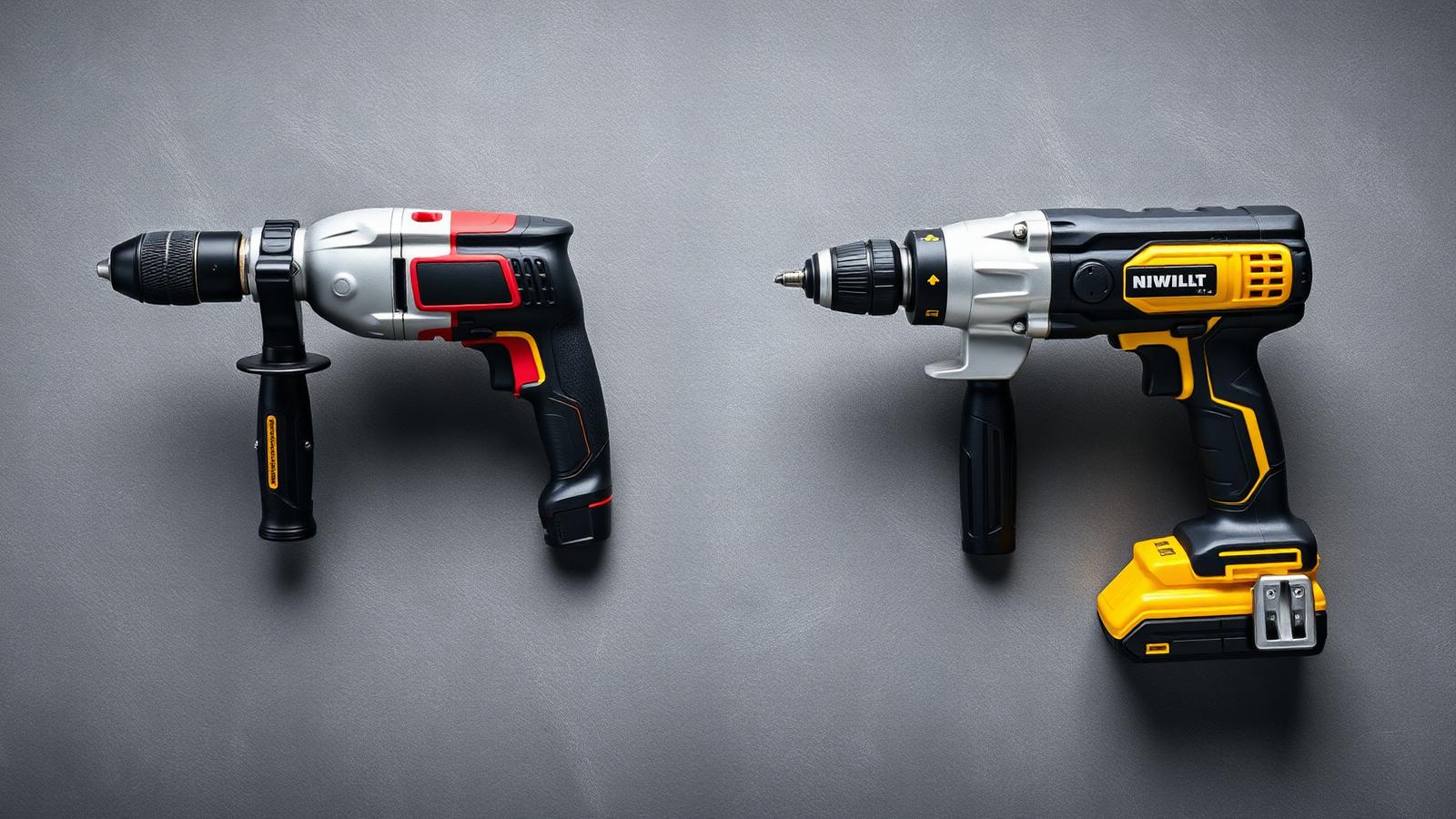
Walk into any tool section and you will meet two tools that look almost interchangeable to the untrained eye: the hammer drill and the impact driver. Both are chunkier than a standard drill/driver. Both make an unmistakable rattling noise under load. And yet they are engineered for entirely different jobs. Buying the wrong one, or using the right one for the wrong task, leads to damaged materials, frustrated users and, occasionally, damaged tools.
What a hammer drill does
A hammer drill is a rotary drill with an added mechanism that produces a rapid forward-and-back movement of the chuck. Imagine a very small, very fast hammer striking the back of the drill bit as it spins. That percussive action helps the tip of a masonry bit break up brick, concrete or stone as it drills through.
You use a hammer drill primarily to make holes in masonry: fixing plugs into a brick wall, mounting a heavy shelf into breeze block, or drilling through concrete for a wall anchor. Most modern combi drills include a hammer mode as a selectable option; you switch it on for masonry work and switch it off for wood and metal.
For very heavy masonry work — repeated large holes, thick concrete — a specialist SDS rotary hammer is the proper tool. The hammer function on a domestic combi drill is designed for occasional light masonry work, not sustained construction use.
What an impact driver does
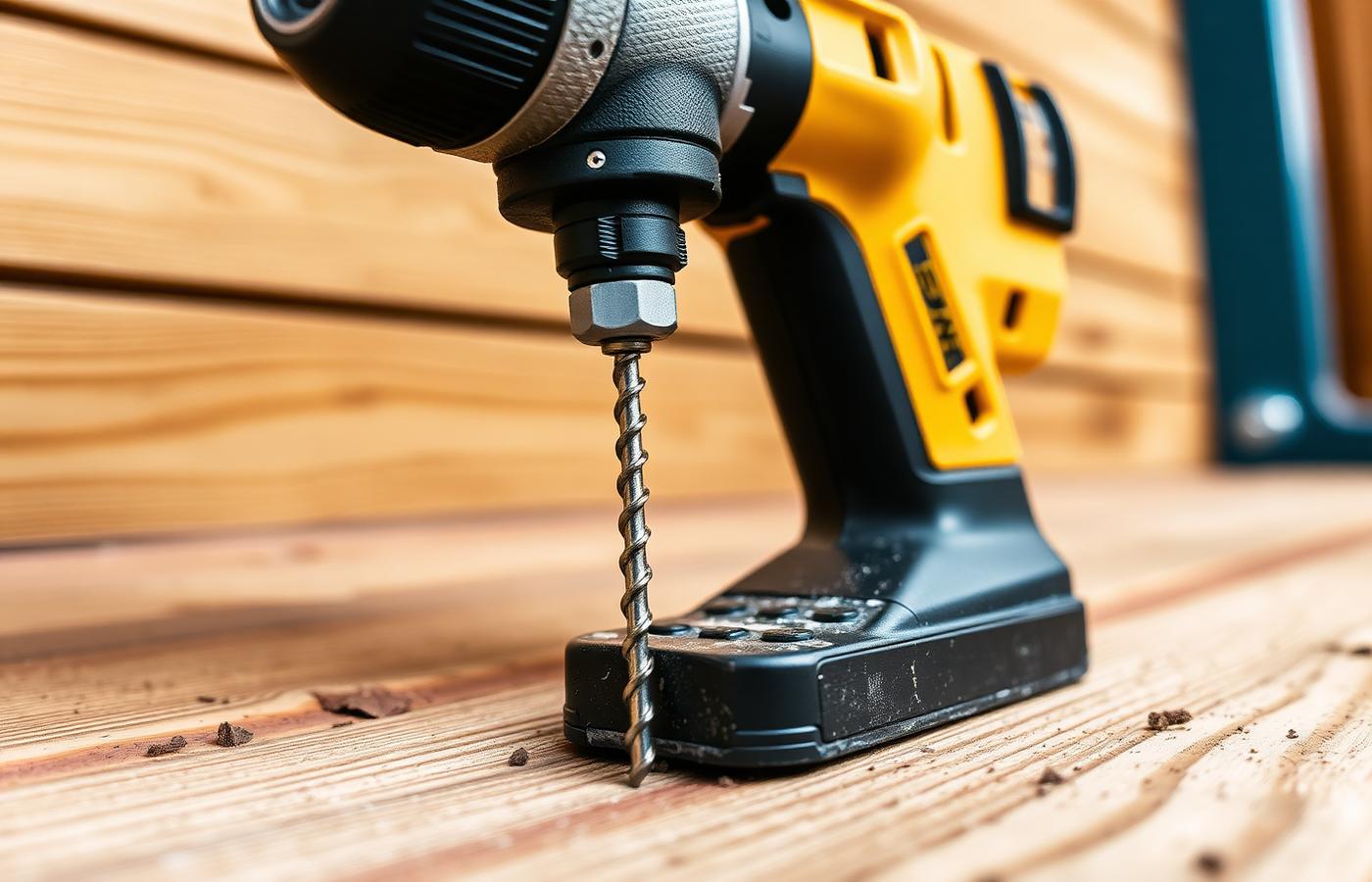
An impact driver looks similar but works on a completely different principle. Instead of striking forwards, it delivers rotational hammer blows: rapid twisting impacts that add force to the turning motion. The result is a tool that can drive very long screws or loosen very tight fasteners without you having to lean on it.
You do not use an impact driver to drill masonry. The forward force is not there. What it excels at is driving screws — especially long ones, into hardwood, into decking, into structural timber. It is also the tool of choice for removing seized bolts and fixings.
Impact drivers use a hexagonal quarter-inch chuck rather than a keyless chuck, so you need hex-shanked driver bits and, if you want to drill holes, hex-shanked drill bits. This is not an inconvenience once you own them, but it does mean the tool cannot be used interchangeably with a standard drill.
Putting them side by side
The clearest way to distinguish the two is by what problem they solve.
- Hole in a brick wall for a shelf bracket → hammer drill (hammer mode on, masonry bit).
- 50 mm screw into decking → impact driver.
- Small pilot hole in softwood → standard drill/driver.
- Rusted bolt on a garden gate → impact driver.
- Large diameter hole in concrete → SDS hammer, not a domestic hammer drill.
- Assembling flat-pack furniture → standard drill/driver on a low clutch setting.
Why an impact driver feels different to use
The first time you use an impact driver, the mechanism kicks in and the tool makes a loud, machine-gun-like sound. It feels almost as if the tool is refusing to work. In fact, it is doing the opposite: each rattle is a rotational blow that drives the screw home. Because the reaction force is absorbed by the mechanism rather than by your wrist, an impact driver handles long screws far more comfortably than a standard drill.
The trade-off is control. Because the tool delivers such high torque so suddenly, it is easy to over-drive small screws or snap delicate ones. Match the tool to the size and material of the fastener.
Do you actually need both?
For most homes, a good combi drill (a drill/driver with a hammer mode built in) will cover most projects for years. It handles wood, metal and light masonry, and includes a proper clutch for delicate work.
An impact driver becomes worthwhile when you find yourself regularly driving large screws — building a deck, fitting decking joists, hanging heavy interior doors, assembling large timber structures. If you never do that work, you may never need one.
For heavy masonry drilling — many holes in dense concrete, chasing channels for cables — the right tool is an SDS rotary hammer, which is a different class of machine again.
A sensible starting kit
If you are just starting to build a home tool collection, a single high-quality 18V combi drill from a well-supported battery platform will handle the vast majority of what a household needs. Add an impact driver when your projects justify one, and rent or borrow an SDS hammer for the rare occasions you need real masonry drilling capacity.
The mistake to avoid is buying every tool on day one because the marketing photographs make them look useful. Buy the tools you need for the projects you are actually doing, and grow the kit outwards from there.
This article is for informational purposes only. It does not constitute professional advice. Always follow the instructions supplied with your tools and consult a qualified professional where appropriate.