Safety Essentials When Using Power Tools at Home

Power tools do the work of a small crew in the palm of your hand, and that is precisely why they need to be treated with respect. The vast majority of home injuries involving power tools are not caused by faulty equipment. They are caused by lapses in habit: skipping the safety glasses, rushing a cut, resting a spinning blade on a workbench or leaving a battery in a tool that has been put away.
This guide sets out the practices that, taken together, dramatically reduce the chance of an accident. None of them require expensive gear. All of them require a small amount of discipline every time you pick up a tool.
Personal protective equipment (PPE)
There are three items of protective equipment that should be in reach of your workbench whenever a power tool is in use.
Eye protection
Wraparound safety glasses that meet a recognised impact standard are the single most important item. Nearly every serious eye injury involving a power tool could have been prevented by wearing them. They cost very little and last for years. Wear them for every cut, every drilled hole and every sanding operation, without exception.
Hearing protection
Circular saws, angle grinders and impact drivers all produce noise loud enough to damage hearing over time. Ear defenders or foam plugs prevent slow, cumulative hearing loss that you will not notice until it is permanent.
Respiratory protection
Any operation that produces dust — sanding, cutting timber, drilling masonry — should be done with at least a disposable FFP2 mask. Some materials, notably MDF and treated timber, produce dust that irritates the airways and should not be inhaled repeatedly.

Clothing and body position
Loose sleeves, watches, ties, jewellery and long hair are all serious hazards around rotating tools. Push cuffs back or roll sleeves. Remove rings before working with metal or on wet materials. Tie long hair back.
Stand so that if the tool were to slip, it would move away from your body rather than into it. When cutting, position your hand and body outside the line of the blade so that a bind or kickback cannot carry the tool towards you.
Setting up the workspace
A safe workspace is uncluttered, well lit and well ventilated. Off-cuts, cables and tools left on the floor are the leading cause of trips. Wet floors are unsafe for anything more than a screwdriver. Keep children and pets out of the working area entirely.
Clamp anything that is not too heavy to move. A clamped workpiece is safer and produces better results than one held by hand or a knee. Two hands on the tool always beats one hand on the tool and one on the wood.
Handling the tool itself
Before you power up a tool, check that the correct bit or blade is fitted and tight. A loose drill bit or a partially seated saw blade is the most common cause of tool damage and secondary injury. Give the chuck or blade retainer a firm final check every time.
Let the tool reach full speed before it touches the material. Let it fully stop before you put it down. Do not rest a spinning blade or bit on the workbench. If the tool jams, release the trigger, wait for it to stop and then work out what caused the jam before restarting.
Cordless-specific safety
Cordless tools remove the tripping hazard of trailing leads, but they add their own considerations.
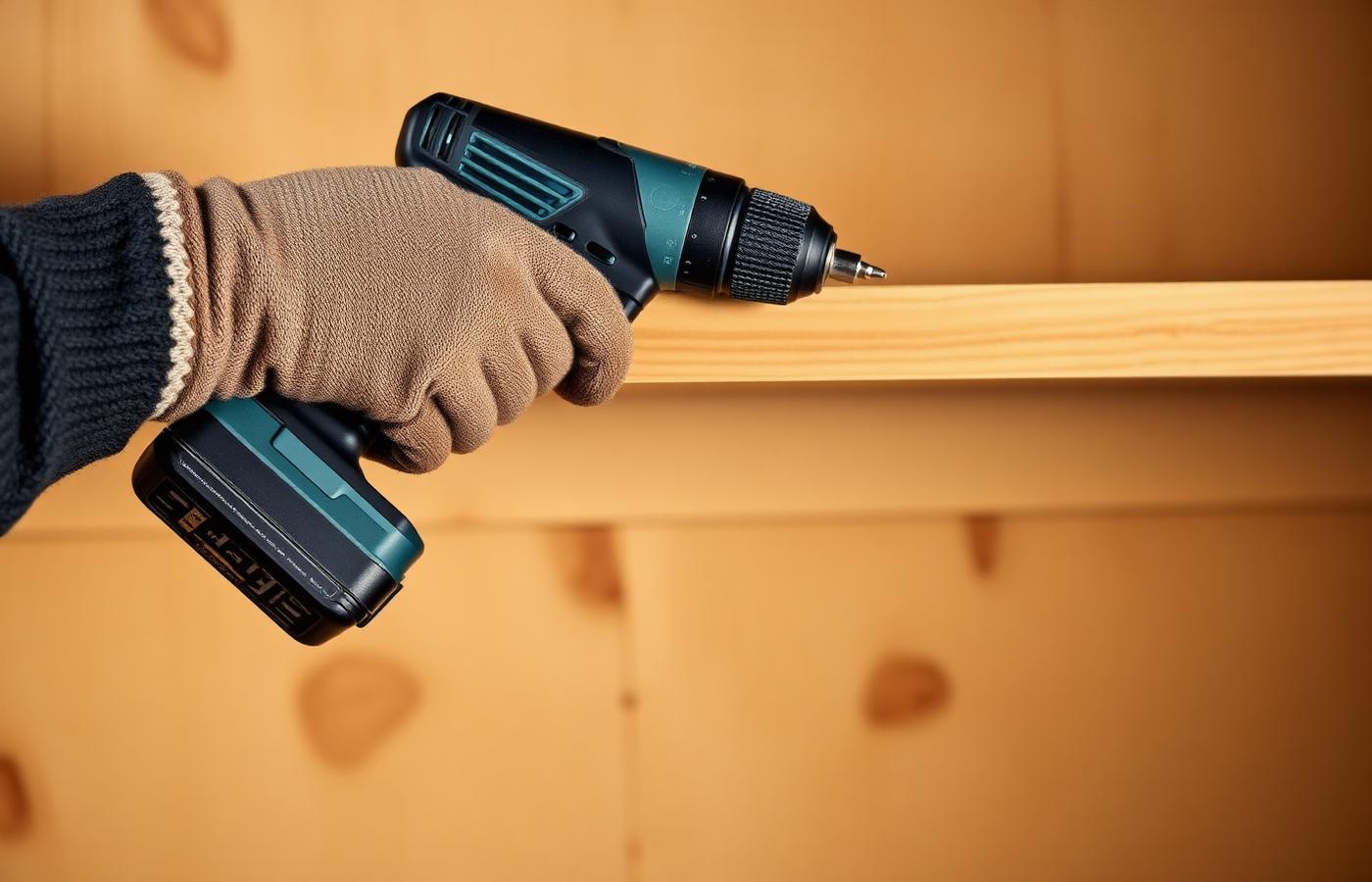
- Remove the battery before changing bits, blades or accessories. Every time.
- Do not carry a cordless tool with your finger on the trigger.
- Store batteries at room temperature. Do not leave them in a cold shed or a hot car for long periods.
- Charge on a hard, non-flammable surface. Do not charge overnight unattended if you can avoid it.
- Retire any battery that has been dropped hard, deformed or immersed in liquid.
Electrical safety with corded tools
For corded tools, keep the cable behind the tool and out of the line of the cut. Do not run cables through pools of water. If you are working outdoors or in a garage, use a residual current device (RCD) — most modern extension leads have one built in.
Do not use a tool with a damaged cable or a cracked plug. Repair it or replace it before you use it again.
The habits that matter most
Serious injuries almost always share the same background: rushing to finish a job at the end of the day; using the wrong tool because the right one is elsewhere; leaving the safety glasses off for just this one cut. The habits that prevent them are simple. Slow down. Take the extra minute to fetch the correct tool. Put the glasses on before every operation, not most of them.
Power tools are safe when treated as the concentrated force they are. Build the habits early and they will look after you for the rest of your DIY life.
This article is for informational purposes only. It does not constitute professional advice. Always follow the instructions supplied with your tools and consult a qualified professional where appropriate.